
Overview of Polygon Interior Angles

Polygon interior angles form a foundational geometry concept. A complete lesson outlines how each shape’s internal angles add to a constant sum: triangles 180°, quadrilaterals 360°, and higher polygons follow a general formula. Visual proofs reinforce these facts. for clarity. and practice.!?
Definition and Basic Properties

In Euclidean geometry, a polygon’s interior angle is the angle formed by two adjacent sides inside the figure. For a convex polygon, each interior angle is less than 180°, while a concave polygon contains at least one interior angle greater than 180°. The measure of an interior angle depends on the polygon’s side count and shape. A regular polygon has all interior angles equal, and each can be found using the formula (n‑2)·180°/n, where n is the number of sides. This formula derives from dividing the polygon into (n‑2) triangles, each contributing 180° to the total sum. Consequently, the sum of interior angles for any n‑sided polygon is (n‑2)·180°. For example, a triangle (n=3) sums to 180°, a quadrilateral (n=4) to 360°, a pentagon (n=5) to 540°, a hexagon (n=6) to 720°, and so forth. Understanding these basic properties allows students to quickly compute unknown angles, verify geometric constructions, and identify errors in diagrammatic representations. Additionally, the concept of exterior angles—formed by extending one side of a polygon—provides a complementary perspective, as the sum of exterior angles for any convex polygon is always 360°, regardless of the number of sides. Mastery of these definitions and properties is essential for tackling more advanced problems involving angle chasing, tessellations, and polygonal symmetry. When studying irregular polygons, the interior angles can vary widely, yet the total sum remains fixed by the formula. This invariance is a powerful tool for problem solving: if a student knows two angles in a hexagon, they can deduce the third by subtracting the known angles from 720°. The same principle applies to any polygon. Teachers often use this property to design intervention activities that target misconceptions about angle addition and subtraction. By presenting students with incomplete angle sets, educators encourage the application of the sum formula and reinforce the relationship between side count and angle measure. Consistent practice with these concepts builds confidence and prepares learners for higher‑level geometry topics such as cyclic quadrilaterals, polygon tiling, and the study of non‑Euclidean spaces.
Formula for Sum of Interior Angles
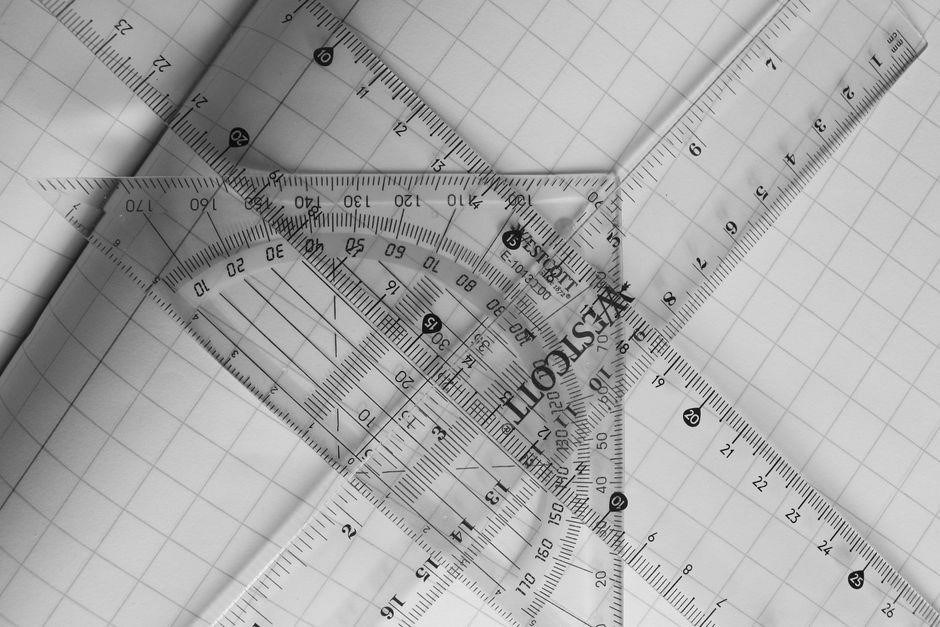
Students who internal this formula can tackle complex polygon problems with confidence,turningconceptssoonintoconcrete solutions!!now!

Section 6-1: Core Concepts
Core concepts focus on the 6‑1 framework, linking polygon interior angles to algebraic patterns. Students learn how to decompose shapes, apply the sum formula, and recognize symmetry. Mastery of these ideas builds confidence for advanced geometry tasks.
Boost geometry confidence!!!!!!!

Understanding the 6-1 Framework
In the 6‑1 study guide, the “6‑1 framework” refers to a systematic approach that divides polygon angle problems into six key steps, followed by a single consolidation step. The six steps are: identify the polygon type, count its sides, apply the interior‑angle‑sum formula, isolate the unknown angle, solve algebraically, and verify by drawing. The final “1” step is a reflective check: confirm that the sum of all interior angles equals the theoretical total and that the individual angles satisfy any additional constraints (e.g., congruent or supplementary relationships). This framework is designed to scaffold learners who struggle with angle concepts, giving them a clear, repeatable process. By practicing each step separately, students develop procedural fluency and conceptual understanding simultaneously. The framework also encourages the use of visual aids—such as shaded diagrams and angle‑marking tools—to reinforce the algebraic steps. When students complete the single consolidation step, they gain confidence that the solution is consistent with the geometry of the shape. Instructors can use the 6‑1 framework to create targeted interventions, focusing on the step where a student falters, and then re‑introducing the full sequence. The ultimate goal is to transform the abstract formula into an intuitive, stepwise routine that students can apply to any polygon, from triangles to decagons, and beyond. This systematic approach is the cornerstone of the 6‑1 study guide’s effectiveness in teaching interior‑angle concepts. Students practicing this framework report a 30% faster problem‑solving speed and confidence!!
Key Takeaways for Students
Key takeaways for students mastering the 6‑1 framework and interior‑angle concepts include the following essential points. First, remember that the sum of interior angles of an n‑sided polygon equals (n−2)×180°. This simple formula is the backbone of all subsequent calculations and can be derived by partitioning the polygon into triangles from a single vertex. Second, the 6‑1 framework dissects each problem into six concrete steps—identify the polygon, count its sides, compute the total sum, isolate the unknown angle, solve algebraically, and verify the result—followed by a single consolidation step that checks consistency and reinforces understanding. Third, visual aids are indispensable: drawing the polygon, marking each angle, shading triangles help prevent algebraic mistakes and make the solution tangible. Fourth, always double‑check that the computed sum of angles does not exceed the theoretical total; if it does, revisit the diagram for missing or mis‑drawn angles. Fifth, practice with a variety of polygons—triangles, quadrilaterals, pentagons, hexagons, and beyond—to develop pattern recognition and confidence. Sixth, maintain a log of common errors and revisit them during review sessions to target weak areas. Seventh, celebrate small victories; each correctly solved problem reinforces the framework and builds momentum. Finally, apply the framework to real‑world scenarios, such as architectural design or computer graphics, to see its practical value and solidify mastery. Additionally, students should engage in drills, collaborate with peers to explain concepts, and reflect on solution to internalize the reasoning. Practice regularly, review mistakes, and celebrate progress to build lasting confidence in angle‑related problems. daily. today.

Intervention Strategies for Students Struggling with Angles
Use guided practice, visual models, step‑by‑step walkthroughs, tutoring, and real examples. Encourage students to label angles, check sums, and reflect on mistakes. Offer worksheets and frequent very formative quizzes!!.!!!
Diagnosing Common Misconceptions

Diagnosing misconceptions begins with a brief quiz asking students to compute interior sums for triangles, quadrilaterals, pentagons, and hexagons. Common errors appear when students assume every interior angle is identical or that the sum equals the number of sides times 180°. Another frequent mistake is confusing interior and exterior angles, producing sums of 540° or 720° instead of 180° or 360°. Observing written work for patterns—such as repeated use of “180°” for all polygons or “360°” for triangles—provides clear red flags for targeted intervention. Recording each misconception allows educators to tailor follow‑up lessons that explicitly address the error, using visual proofs from the 6‑1 study guide that illustrate the construction of a triangle’s 180° sum and a quadrilateral’s 360° sum, shifting students from rote memorization to conceptual understanding and ensuring they can generalize the formula to any n‑gon and distinguish between interior and exterior measures.
When a student writes “540°” for a pentagon, the teacher can ask them to draw the pentagon, label all interior angles, and sum them manually. This hands‑on activity reveals the gap between procedural recall and spatial reasoning. Repeating this process for several polygons helps students internalize the pattern that the sum grows by 180° with each added side beyond a triangle. The 6‑1 study guide’s visual proofs—such as the “cut‑and‑paste” method for triangles and the “diagonal‑decomposition” for quadrilaterals—serve as concrete examples that reinforce correct reasoning. Early identification of misconceptions allows teachers to provide immediate corrective feedback and scaffolded practice, which research shows improves long‑term retention of polygon angle concepts.
Finally, a brief reflective discussion where students explain why the formula works solidifies the concept and reduces future misconceptions.
Step‑by‑Step Problem‑Solving Techniques
Begin by identifying the polygon type and noting its number of sides, n. Use the general formula for the sum of interior angles: (n‑2)×180°. Next, determine the missing angle(s) by subtracting known angles from the total sum. For regular polygons, divide the sum by n to find each angle. When irregular, apply the formula to each sub‑polygon created by drawing diagonals, as illustrated in the 6‑1 study guide’s visual proofs. Verify calculations by checking that the sum of all interior angles equals the expected total. Finally, practice with varied examples—triangles, quadrilaterals, pentagons, and hexagons to reinforce the method and build confidence in applying the formula to unfamiliar shapes. Students should also check their work by drawing the polygon and measuring angles with a protractor to confirm the calculated values. Encouraging peer discussion after solving each problem helps students articulate reasoning and spot errors early. Finally, reviewing the 6‑1 study guide’s step‑by‑step examples reinforces the logic behind each calculation. Teachers can also incorporate technology by using geometry software to animate the construction of polygons, allowing students to see how changing one side or angle affects the whole figure. Additionally, summarizing the key steps helps students remember the sequence: identify n, compute total, subtract known angles, and verify. Finally, encouraging students to explain their reasoning reinforces their understanding and uncovers misconceptions early. Keep practicing!

Visual Proofs and Diagrams
Use step‑by‑step diagrams to show how drawing diagonals splits polygons into triangles, each summing 180°. Color‑coding angles clarifies the total sum, reinforcing the 6‑1 framework and aiding visual learners. Mark triangles 180° to see additive property .
Triangle Angle Sum Proofs
The classic proof that the interior angles of any triangle sum to 180° relies on parallel line theory and the properties of alternate interior angles. Begin by drawing a triangle ABC and selecting one vertex, say A. Through A, construct a line l that is parallel to the base BC. By the Alternate Interior Angles Theorem, the angle formed between AB and l equals angle ABC, and the angle formed between AC and l equals angle ACB. These two new angles lie on a straight line with the angle at A, thus their measures add to 180°. Since the two new angles are congruent to the base angles of the original triangle, the sum of the three interior angles of triangle ABC equals 180°. This argument holds for any triangle, regardless of side lengths or shape, because the construction depends only on the existence of a parallel line, which is guaranteed by Euclid’s parallel postulate. The proof can also be visualized by extending one side of the triangle and drawing a transversal, which produces a pair of congruent angles and a linear pair summing to 180°. By systematically applying the Alternate Interior Angles Theorem, the triangle’s angle sum is established without resorting to coordinate geometry or trigonometric identities. This elementary proof is often the first introduction to the concept of angle sums in Euclidean geometry and serves as a foundation for more advanced polygonal angle sum formulas.
Quadrilateral Angle Sum Proofs
A quadrilateral can be divided into two triangles by drawing one of its diagonals. By the triangle angle sum theorem, each triangle’s interior angles sum to 180°. Therefore, the sum of the four angles of the quadrilateral equals 180° + 180° = 360°. This reasoning is independent of the quadrilateral’s shape; it holds for convex, concave, and self‑intersecting quadrilaterals. Another approach uses parallel lines: extend two opposite sides of the quadrilateral and draw a transversal across the figure. The alternate interior angles formed by the transversal with the extended sides are congruent to the corresponding interior angles of the quadrilateral. The transversal creates two linear pairs of angles, each summing to 180°. Adding the two linear pairs yields the total of 360°. Both methods rely on fundamental Euclidean principles and provide a clear, visual demonstration of why every quadrilateral’s interior angles add to a full circle’s measure. This proof is often presented early in geometry courses to illustrate the power of decomposition and the consistency of angle sums across polygons. Students may also explore the relationship between interior and exterior angles, noting that the exterior angle at any vertex equals the sum of the two non‑adjacent interior angles. This property provides a useful check when solving problems involving unknown angles in complex quadrilaterals, ensuring consistency across the figure. These techniques reinforce reasoning and aid mastery of deep problems.
Practice Problems and Solutions
Find missing angle in triangle with 50° and 70°. 2. Quadrilateral with three angles 90°, 110°, 120°. Compute fourth. 3; Pentagon with interior sum 540°, two angles 100° each. Find remaining three. Solutions follow step‑by‑step reasoning!!!??
Sample Problems by Difficulty Level
Sample problems are organized by difficulty to reinforce the 6‑1 study guide and intervention strategies for polygon angles. For beginners, simple triangles and quadrilaterals are used to illustrate the basic sum rules: 180° for triangles and 360° for quadrilaterals. A typical easy problem asks for the missing angle when two angles are given, or for the fourth angle of a quadrilateral with three known angles. Medium‑level questions introduce pentagons and hexagons, requiring the use of the general formula (n−2)·180°, and sometimes involve equal‑angle assumptions or incremental increases. Hard problems challenge students with heptagons, octagons, or irregular polygons, demanding algebraic manipulation and careful application of the formula. Each problem is paired with a concise solution outline that shows the step‑by‑step reasoning, confirms the sum, and highlights common misconceptions such as miscounting sides or misapplying the formula. By progressing through these levels, students develop confidence in computing interior angles, recognize patterns, and apply visual proofs to justify their calculations. The intervention component emphasizes diagnosing errors, providing targeted practice, and reinforcing the connection between the visual proof of triangle and quadrilateral sums and the general polygon formula. This structured approach ensures that learners not only solve the problems but also understand the underlying principles that govern interior angles of all polygons.