
Craftsman Table Saw Instruction Manual: A Comprehensive Guide
This manual provides essential guidance for safe operation, installation, maintenance, and troubleshooting of your Craftsman table saw, ensuring optimal performance and longevity.
Welcome to the world of woodworking with your new Craftsman Table Saw! This robust tool is designed to deliver precision and power for a wide range of cutting tasks, from simple straight cuts to intricate joinery. Before embarking on your projects, it’s crucial to familiarize yourself with this manual. It contains vital information regarding safety precautions, proper setup, operational procedures, and routine maintenance.
Craftsman has a long-standing reputation for quality and durability, and your table saw is no exception. This guide will help you unlock its full potential while prioritizing your safety. Remember to carefully read and understand all instructions before operating the saw. Ignoring safety guidelines can lead to serious injury. This manual is a key resource for maximizing your woodworking experience and ensuring years of reliable service from your Craftsman table saw.
Understanding Model Numbers (e.g., 315.218050)

Your Craftsman table saw’s model number, such as 315.218050, is crucial for identifying specific parts, accessing relevant documentation, and ensuring compatibility when ordering replacements. This alphanumeric code provides detailed information about the saw’s features, manufacturing date, and specifications. When contacting Sears Parts & Repair Center (1-888-331-4569) or utilizing online resources like craftsman.com or sears.com, having the complete model number readily available will expedite the process.
The model number is typically located on a data plate affixed to the saw’s motor housing or base. Accurate identification using this number guarantees you receive the correct components for maintenance and repairs, preventing potential issues with fit or functionality. Referencing the model number also allows access to the most up-to-date manuals and support information tailored to your specific table saw model.
Safety First: Essential Safety Rules
Prioritizing safety is paramount when operating a Craftsman table saw. Before use, thoroughly read and understand all safety rules and operating instructions detailed in this manual. WARNING: Failure to heed these precautions can result in severe injury; Always wear appropriate eye and face protection, and never remove safety guards or devices. Keep hands clear of the blade at all times, and disconnect power before making adjustments or changing blades.

Ensure a clean and well-lit work area, free from distractions. Never operate the saw when tired or under the influence of drugs or alcohol. Use push sticks and featherboards to maintain control of the workpiece. Be aware of kickback potential and utilize anti-kickback pawls. Remember, responsible operation is key to a safe woodworking experience.
General Safety Warnings
Always disconnect the power cord before servicing, changing accessories, or performing any maintenance on your Craftsman table saw. Avoid wearing loose clothing, jewelry, or restraints that could become entangled in moving parts. Maintain a firm grip on the workpiece and ensure it is properly supported. Never reach over or across the blade.
Inspect the saw for damage before each use, and do not operate if any parts are missing or damaged. Be mindful of bystanders and keep them at a safe distance from the work area. Use only blades that are specifically designed for the table saw and are in good condition. Reduce the risk of injury by understanding and following these crucial warnings.
Specific Table Saw Safety Precautions
Always use the blade guard and anti-kickback pawls unless performing a specific operation that requires their removal – then, re-install immediately after. Never remove safety devices. Understand the function of each control before operating the saw. Avoid cutting small pieces of material unsupported.
Ensure the fence is parallel to the blade, and the miter gauge is properly adjusted. Never stand directly in line with the blade. Be aware of potential kickback and how to control it. Always push the workpiece through the blade, never pull it. Maintain a clean work area free of obstructions. Prioritize safety to prevent accidents and ensure a productive woodworking experience.

Installation and Setup
Proper assembly and setup are crucial for safe and accurate operation of your Craftsman table saw; follow these steps carefully for optimal results.
Unboxing and Initial Inspection
Carefully unpack your new Craftsman table saw, taking inventory of all components against the parts list included within the packaging. Inspect each part for any signs of damage incurred during shipping, such as dents, scratches, or broken pieces.
Report any missing or damaged parts immediately to Sears Parts & Repair Center at 1-888-331-4569. Do not attempt to assemble the saw if parts are missing or damaged. Verify the model number (e.g., 315.218050) on the saw matches the model number on your purchase receipt and the manual.
Retain all packaging materials until you are satisfied with the condition of the saw. Ensure you have received all necessary hardware, including bolts, screws, washers, and the blade. A thorough initial inspection prevents issues during assembly and ensures safe operation.
Assembling the Table Saw
Begin assembly on a clean, level surface, utilizing all provided hardware. Refer to the detailed diagrams within this manual for proper component orientation. First, securely Attaching the Legs and Base, ensuring all bolts are tightened to the manufacturer’s specifications for stability.
Next, carefully Installing the Blade Guard and Anti-Kickback Pawls, verifying their proper function and alignment. These safety features are crucial for preventing injuries. Double-check all connections, ensuring they are snug but not over-tightened, which could damage the components.
Take your time and follow each step meticulously. Incorrect assembly can compromise the saw’s performance and safety. If you encounter difficulties, consult the Sears Parts & Repair Center at 1-888-331-4569 for assistance.
Attaching the Legs and Base
Begin by laying the table saw base upside down on a protected surface to prevent scratching. Align the legs with the designated mounting points on the base, ensuring correct orientation as illustrated in the diagrams. Use the provided bolts, washers, and lock nuts to secure each leg firmly to the base.
Tighten the bolts gradually in a crisscross pattern to distribute pressure evenly and prevent warping. Avoid over-tightening, as this could strip the threads or damage the base. Once all legs are attached, carefully flip the table saw upright.
Verify the stability of the saw by gently rocking it. If any wobble is detected, re-tighten the leg bolts. A stable base is critical for safe and accurate operation. Refer to the Sears website (craftsman.com) for visual guides if needed.
Installing the Blade Guard and Anti-Kickback Pawls
The blade guard is a crucial safety component; attach it by aligning the mounting points on the guard with those on the table saw’s mounting plate. Secure it using the provided screws, ensuring it moves freely with the blade’s height and tilt adjustments.
Next, install the anti-kickback pawls. These are designed to prevent the workpiece from being thrown back towards the operator during a cut. Position the pawls behind the blade, aligning them with the slots in the throat plate.
Ensure the pawls are properly seated and can pivot freely. Regularly inspect these components for wear or damage. Refer to the manual or craftsman.com for detailed diagrams. Never operate the saw without a properly installed blade guard and functioning anti-kickback pawls.
Power Connection and Electrical Requirements
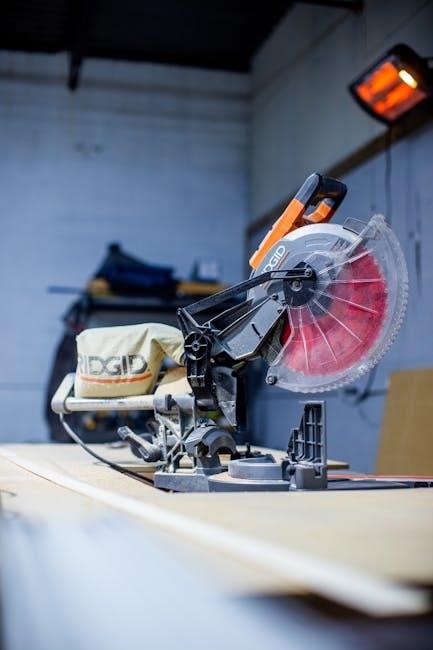
Before connecting your Craftsman table saw, verify your power supply matches the saw’s requirements, typically 120V, 60Hz. Use a grounded three-prong plug and a dedicated circuit to prevent overloading. Avoid using extension cords if possible; if necessary, use a heavy-duty cord rated for at least 15 amps.
Ensure the power switch is in the “OFF” position before plugging in the saw. Inspect the power cord for any damage – do not use the saw if the cord is frayed or damaged.
Proper grounding is essential for safety. Never remove the grounding pin from the plug. Consult a qualified electrician if you are unsure about your electrical setup. Always disconnect the power before performing any maintenance or blade changes.
Operating Instructions
Mastering your Craftsman table saw involves understanding basic operations, precise cutting techniques—straight, miter, and bevel—and prioritizing safety with each use.
Basic Table Saw Operation
Before initiating any cut, ensure the blade is properly installed and guarded. Always wear appropriate safety glasses and hearing protection. Familiarize yourself with the location of the power switch and the blade height adjustment lever. To begin, raise the blade to slightly above the workpiece thickness.
Securely position the material against the fence or miter gauge for accurate cuts. Maintain a firm grip on the workpiece throughout the cutting process. Feed the material smoothly and consistently into the blade, avoiding excessive force or hesitation. Never reach over or behind the blade while it’s rotating.
After completing the cut, allow the blade to come to a complete stop before removing the workpiece. Always disconnect the power source before making any adjustments or performing maintenance. Remember to review the complete safety section before operating the saw.
Making Straight Cuts
Achieving precise straight cuts requires proper setup and technique. Begin by ensuring the table saw fence is perfectly parallel to the blade. Use a reliable measuring tool to verify alignment. Securely clamp the fence in position. For longer workpieces, utilize a support extension table or roller stand to prevent sagging and ensure consistent cutting height.
Position the material firmly against the fence, maintaining consistent contact throughout the cut. Use a push stick or push block for smaller pieces or when nearing the end of the cut, keeping your hands safely away from the blade. Feed the material at a moderate, steady pace, avoiding stops or starts.
Double-check your measurements before each cut and always prioritize safety. A properly aligned fence and controlled feed rate are crucial for accurate, straight results.
Making Miter Cuts
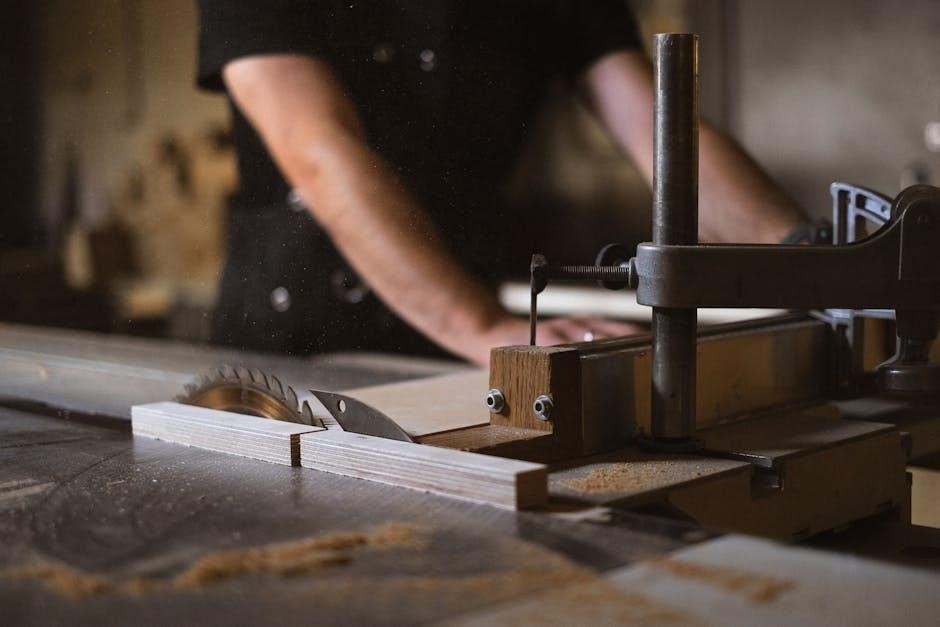
Miter cuts, creating angled crosscuts, demand careful adjustment of the table saw’s miter gauge. Loosen the miter gauge locking mechanism and rotate the gauge to the desired angle, utilizing the degree markings for accuracy. Securely tighten the lock once the angle is set. Ensure the miter gauge slides smoothly within the table saw’s miter slots.
Position the workpiece firmly against the miter gauge, maintaining consistent contact throughout the cut. For wider pieces, consider using a sacrificial fence attached to the miter gauge for added support and stability. Feed the material slowly and steadily, following the miter gauge’s path.
Always double-check the angle setting before cutting and prioritize safety. Precise miter gauge adjustment and controlled feeding are key to achieving accurate angled cuts.
Making Bevel Cuts
Bevel cuts, producing angled cuts through the thickness of the wood, require tilting the table saw blade. Unlock the blade tilt mechanism and carefully adjust the blade to the desired bevel angle, referencing the degree scale. Securely lock the tilt mechanism after setting the angle. Always verify the angle with a separate angle finder for precision.
When making bevel cuts, ensure the workpiece remains flat against the table surface throughout the entire cut. Use a featherboard to maintain consistent pressure and prevent lifting. Feed the material smoothly and evenly, avoiding any sudden movements.
Be mindful of the reduced cutting height when the blade is tilted. Prioritize safety and double-check all adjustments before initiating the cut.
Maintenance and Troubleshooting
Regular maintenance, including blade changes, belt checks, and cleaning, ensures optimal performance. Addressing common issues promptly will extend the saw’s lifespan and safety.
Blade Changes and Adjustments
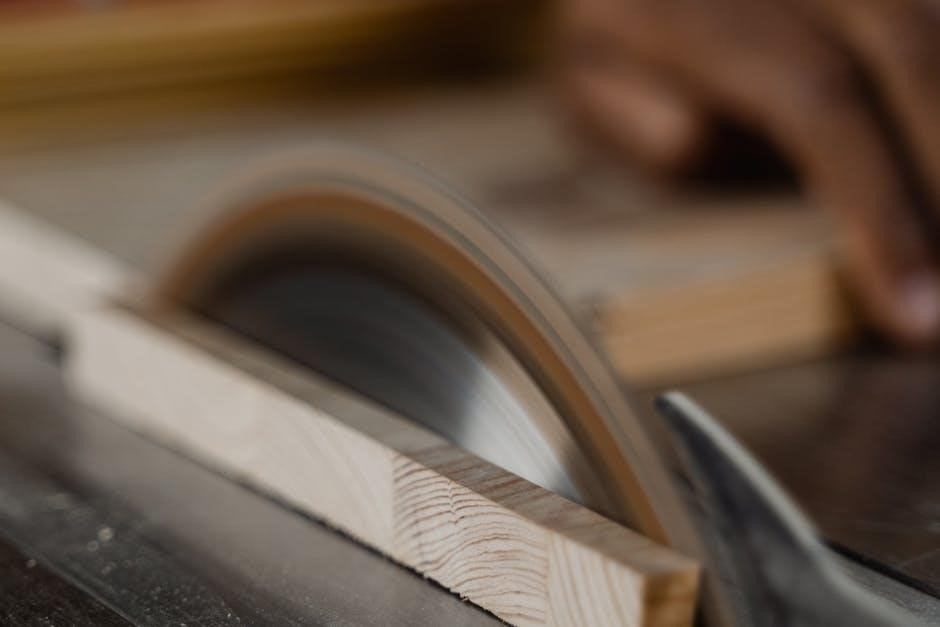
Safely disconnecting the power source is paramount before any blade work. Utilize the appropriate wrenches to loosen the arbor nut, carefully removing the old blade. Ensure the new blade is correctly oriented, matching the rotation arrow, and securely tighten the arbor nut to the manufacturer’s specifications.
Proper blade alignment is crucial for accurate cuts. Check for blade runout using a dial indicator, adjusting as needed. Verify blade parallelism to the miter slots; adjustments can be made using the table saw’s trunnion system. Regularly inspect the blade for sharpness and damage, replacing it when necessary. A dull or damaged blade increases the risk of kickback and reduces cutting quality. Always use a blade guard and anti-kickback pawls during operation.
Belt Tensioning and Alignment
Maintaining proper belt tension is vital for efficient power transfer and preventing slippage. Inspect the drive belt regularly for wear, cracks, or fraying, replacing it if damaged. Adjust belt tension using the motor mounting bolts, ensuring it’s snug but not overly tight – excessive tension can damage bearings.
Belt alignment prevents premature wear and ensures smooth operation. Check the alignment of the motor and blade pulleys; misaligned pulleys cause belt tracking issues and reduce efficiency. Use a straightedge to verify alignment, adjusting the motor position as needed. A properly aligned belt should run smoothly without wandering. Regularly clean the pulleys to remove dust and debris, improving belt grip and extending its lifespan.
Lubrication and Cleaning
Regular lubrication ensures smooth operation and extends the life of your Craftsman table saw. Apply a few drops of high-quality oil to the arbor shaft bearings, elevating stand components, and any moving parts as specified in the parts diagram. Avoid over-lubrication, as excess oil attracts dust and debris.
Consistent cleaning is crucial for safety and performance. After each use, remove sawdust and debris from the table surface, blade guard, and internal components using a brush or vacuum. Never use compressed air, as it can spread fine dust particles. Periodically clean the pulleys and belts to maintain proper grip. Inspect and clean electrical connections to prevent corrosion and ensure reliable operation.
Common Problems and Solutions
If the blade drifts during cutting, check belt tension and alignment, ensuring the blade is properly secured. For excessive vibration, verify the blade is sharp and correctly installed, and inspect the table for any loose components. If the motor overheats, allow it to cool down and check for obstructions hindering airflow.
Should the saw experience power issues, examine the power cord, circuit breaker, and electrical connections. If the blade guard malfunctions, adjust or replace it immediately. For difficulty with blade changes, ensure the arbor lock is fully engaged. Always disconnect power before attempting any repairs. If problems persist, consult the Sears Parts & Repair Center at 1-888-331-4569.

Parts List and Support
Locate detailed component diagrams and access genuine Craftsman replacement parts through Sears, ensuring your table saw remains in peak operational condition.
Identifying Table Saw Components
Understanding the names and functions of each part is crucial for safe operation and maintenance. Key components include the table, fence, miter gauge, blade, blade guard, anti-kickback pawls, rip knife, handwheels (for blade height and bevel adjustments), motor, switch, and dust collection port.
The table provides a stable work surface. The fence guides wood during ripping cuts, ensuring straightness. The miter gauge supports wood for crosscuts and angled cuts. The blade performs the actual cutting. The blade guard offers protection, while anti-kickback pawls prevent dangerous workpiece movement. The rip knife scores the wood before the blade cuts. Handwheels control blade adjustments. Familiarize yourself with each part’s location and purpose before operating the saw. Refer to exploded diagrams in this manual or online at craftsman.com for visual identification.
Sears Parts & Repair Center Information (1-888-331-4569)
For genuine Craftsman replacement parts and professional repair services, contact the Sears Parts & Repair Center. Our dedicated team can assist you in identifying the correct components for your specific table saw model – ensuring compatibility and optimal performance. We offer a wide range of parts, including blades, belts, guards, switches, and more;
To expedite your request, have your table saw’s model number (e.g., 315.218050) readily available. You can reach us at 1-888-331-4569. Alternatively, visit our website for online parts ordering and service scheduling. Sears Parts & Repair Center is committed to providing reliable support and maintaining the longevity of your Craftsman tools. We also offer in-home repair options for added convenience. Don’t hesitate to reach out with any parts or repair inquiries.
Customer Help Line (1-800-843-1682 / 1-800-932-3188)
Need assistance with your Craftsman table saw? Our dedicated Customer Help Line is available to provide support and answer your questions. Whether you require clarification on operating instructions, troubleshooting guidance, or have concerns regarding safety features, our knowledgeable representatives are here to help.
You can reach us at 1-800-843-1682 or 1-800-932-3188. Please have your table saw’s model number handy when you call to ensure efficient service. We are committed to ensuring your satisfaction and safe operation of your Craftsman tool. Our team can assist with locating manuals, understanding warranty information, and resolving common issues. We strive to provide prompt and courteous assistance to all our valued customers. Don’t hesitate to contact us for any support needs.
Online Resources and Manual Downloads (craftsman.com / sears.com)
Enhance your Craftsman table saw experience with our extensive online resources! Visit craftsman.com or sears.com to access a wealth of information, including downloadable manuals, helpful videos, and frequently asked questions. You can easily find the specific manual for your model number (e.g., 315.218050) and keep it readily available on your computer or mobile device.
Our website offers detailed diagrams, parts lists, and troubleshooting guides to assist with maintenance and repairs. Explore safety tips, operating instructions, and accessory recommendations to maximize the performance and longevity of your table saw. Register your product online for exclusive updates and promotions. We continually update our online resources to provide the most current and comprehensive support for your Craftsman tools.